среда, 30 января 2013 г.

What goes into tobacco products?


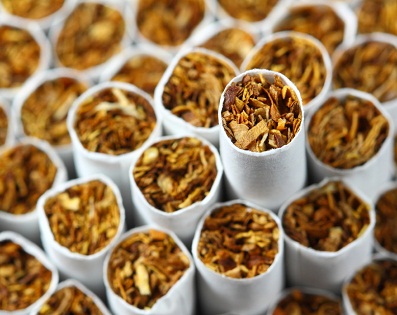
The majority of smokers use cigarettes. A manufactured cigarette is a carefully designed device for delivering nicotine. Cured and processed tobacco is packed and wrapped to create a standardised product. The characteristics of each brand depend on the tobacco type and blend, how it is cured, the additives used and other technical characteristics of the cigarette. These may affect for example the content of different substances in the smoke, burning characteristics nicotine release and the size of smoke particles.
In recent decades, more and more additives have been introduced, and current cigarettes may contain up to 10 per cent additives by weight. Nearly 600 different additives have been documented. They also affect smoke characteristics, such as colour, harshness, odour and flavour.
The main tobacco additives are sugars, which are also present naturally, and moisturising agents. Others include preservatives and numerous flavourings, including cocoa, liquorice, menthol and lactic acid.
Roll-your-own cigarettes, cigars, waterpipes and smokeless tobacco products, which may also contain additives, all account for small portions of the total market.

Bolshoi faces fine for advertising tobacco


Russia’s Bolshoi Theater has been found guilty of violating the law on advertising and is facing a fine of 110,000 rubles for promoting tobacco smoking, the country’s anti-trust watchdog said on Tuesday.
“Advertisements of Japan Tobacco International tobacco company were distributed through a booklet with the theater’s program at performances in September and October 2012 and were not accompanied by a warning of the harm caused by smoking,” the Federal Anti-Monopoly Service (FAS) said on its website.
FAS has ruled to impose a fine of 110,000 rubles on the Bolshoi. The theater has 10 days to appeal against the ruling.

вторник, 15 января 2013 г.

Korea enjoys tobacco trade surplus


The value of South Korea’s tobacco exports increased by 370 per cent during the past 10 years while imports remained steady, resulting in a tobacco trade surplus since 2004, according to a story in The Korea Times.
Ninety seven per cent of tobacco exports comprise cigarettes.
In 2002, Korea’s tobacco imports amounted to more than double its exports but, by last year, exports had risen to be 1.7 times higher than its imports, data from the Korea Customs Service (KCS) has shown.
“Much of the domestic demand for imported manufactured tobacco appears to have been replaced by demand for Korean-made products as their quality improved,” said a KCS official.
In 2002, more than three quarters of the tobacco imported by Korea was in the form of manufactured products, but this share fell to about 40 per cent last year, with the rest comprising unmanufactured leaf tobacco.
Meanwhile, the Yonhap News Agency said that the value of exports had increased from US$156.29 million to US$572.05 million during the 10 year period, says Tobacco Reporter.

четверг, 3 января 2013 г.

Shareholders File Anti-Smoking Resolutions With Movie Companies


An anti-smoking crusade is being taken to movie companies by shareholders who are filing resolutions asking that movies designed for young people eliminate smoking or have R ratings.
The Interfaith Center on Corporate Responsibility (ICCR), one of the leaders of the effort, notes a recent U.S. Surgeon General report that says smoking depicted in movies causes more young people to take up smoking.
Shareholders of several major movie companies have filed resolutions asking that the companies give movies depicting smoking an R rating or eliminate smoking from movies anticipated to get a G, PG, or PG-13 rating. Shareholder resolutions have been filed with Time Warner, CBS and Comcast. Similar resolutions are to be filed with The Walt Disney Co., News Corp, Sony and Viacom, according to ICCR and As Your Sow, a nonprofit organization that promotes corporate responsibility through shareholder advocacy.
Attorneys general in 38 states have written to media companies with similar requests, according to ICCR.
“Investors are concerned about the financial, legal, and reputation risks these studios may bear due to the health impact on children and teens that are exposed to smoking in the movies they watch,” says Cathy Rowan, director of socially responsible investments for Trinity Health, an ICCR member.
Tobacco use in youth rated movies increased in 2011 by 34 percent, says Michael Passoff, senior strategist at As You Sow, reports Financial Advisor.

четверг, 20 декабря 2012 г.

Columbus eyes tobacco-free zones in parks


The Columbus Recreation and Parks Department is considering a policy that would create tobacco-free areas at city-run facilities.
The department is looking to eliminate the use of tobacco products - that includes cigarettes as well as smokeless products - in areas such as playgrounds, tennis courts, ball diamonds, basketball courts and youth-sports zones.
Officials with recreation and parks, along with Columbus Public Health, have sent a survey to tens of thousands of people and have posted the questionnaire on their individual websites. The survey also was sent to area commissions and civic groups.
"It's just our attempt to educate people as to what's the right and healthy thing to do for the community," said Steve Aumiller, an assistant director with recreation and parks.
The survey will help determine where appropriate restrictions should take place, Aumiller said.
Smoking already is prohibited in shelter houses and baseball dugouts but not in open-air picnic shelters.
In some places, such as Berliner Park, smoking, chewing tobacco and sunflower seeds are banned because of the potential damage to new artificial infields, Aumiller said.

вторник, 11 декабря 2012 г.

Bulgarian PM hints at backtrack on smoking ban but Health Minister stands firm


Bulgarian Prime Minister Boiko Borissov has hinted that he will not oppose a backtrack being considered by his ruling party MPs that would see the indoor smoking ban eased to allow people to light up in restaurants and bars after 10pm, but Health Minister Desislava Atanasova has pledged to stand firm against the anti-smoking law being amended.
Bulgaria’s law against smoking in enclosed public spaces came into effect at the beginning of June 2012. The full ban overtook an earlier version that allowed restaurants and bars to set aside smoking spaces with separate ventilation.
With the advent of winter, campaigning in Bulgaria against the full ban has been stepped up and restaurants, bars and nightclubs have been increasingly strident in insisting that the full smoking ban is harming earnings and jobs.
A small group of independent MPs was the first to say that they would table in Parliament a bill to revert to the earlier version of the law, as restaurant and pub associations have asked, a proposal that at first met with firm rejection by Bulgaria’s centre-right ruling party GERB.
However, it has emerged that Parliament’s health committee, at a meeting on December 13, will consider amendments that would allow smoking in enclosed public places after 10pm, according to Sofia Globe.
Dr Daniela Daritkova, head of the committee, confirmed on December 7 that a discussion on the proposed amendments would take place.
However, she said that there was no serious evidence that businesses had been seriously hit in the first three months of the full ban being in effect. When it came to balancing the interests of business and of public health, it was health that should take precedence, she was quoted as saying.
Bulgarian-language media reports in Sofia and in Bulgaria’s second city, Plovdiv, said that there were widespread violations of the ban at places of entertainment at night.

вторник, 4 декабря 2012 г.

New tobacco items pose risks


As cigarette smoking rates have dropped, and more states have adopted public smoking bans, the tobacco industry has created new products to keep users hooked and find new customers, according to Beloit Daily News.

“Other tobacco products,” or OTPs, are harmful and addictive. They are marketed aggressively and priced inexpensively. The new smokeless tobacco products appeal to youth. Adults need to know these products exist, and youth need more help to resist them.

Listed below are some of the most common types of OTP.

• Tobacco sticks resemble toothpicks and will dissolve within 10 minutes when placed in the mouth. One of these sticks contains three times the nicotine as one cigarette.

• Orbs look like small pellets, about the size of a Tic Tac breath mint and last for about 15 minutes. One orb contains 1 milligram of nicotine, which is the equivalent to the nicotine level of one cigarette.

• Strips, similar to a breath mint strip, take 3 minutes to dissolve. They contain slightly less nicotine than one cigarette.

• Snus, tobacco contained in small pouches, is another smokeless tobacco product that is being marketed to smoker to use when they aren’t able to smoke cigarettes.

OTP use is not a safe alternative to cigarette smoking. The consequences of using OTP include cancer, tooth loss, gum disease, and increased risk of heart disease and stroke.

воскресенье, 25 ноября 2012 г.

No dice on smoking


Ohio is the first state that forbids smoking in casinos, Ameet Patel, general manager of Hollywood Casino, which is owned by Penn National Gaming said. This will create a cultural change, Patel said. Casinos and smoking have traditionally gone together like black and jack.

Ohio’s no-smoking law got the ball rolling on the idea — and eventual policy — not to hire smokers for Penn National’s Hollywood casinos in Columbus and Toledo.

As part of an overall wellness push, the employee cafeteria does not serve fried foods but instead will offer a wide assortment of healthful choices. There is an on-site gym for employees and several programs to encourage employees to exercise and participate in company-sponsored sporting activities.

“There’s no doubt in my mind that, down the road, this will be the law of the land and smoking will be a thing of the past,” Patel said.

The law of the land on the rights of smokers in the workplace is up to each state, informs The Columbus Dispatch.

“There was a campaign by the tobacco industry, helped by the ACLU, in the late 1980s and early 1990s to pass laws to prevent companies from doing this,” said Micah Berman, director of New England Law, Boston’s Center for Public Health and Tobacco Policy. Twenty-nine states passed smoker-protection laws. Ohio did not.

“Ohio is an at-will employment state, which means companies can hire or fire someone for any reason unless there’s a state law that specifically says you can’t ... such as discrimination, race, gender laws,” Berman said.
Smoking is not protected, he said.

Berman is in the midst of a study of how much smokers cost their employers, and his initial estimate is about $6,000 a year. “That’s for the excess health-care costs and costs related to lost time from smoking breaks and ‘presenteeism,’  ” he said. Presenteeism occurs “when people can’t focus due to nicotine addiction” and are less productive.

Other companies or institutions that refuse to employ smokers include Alaska Airlines, Union Pacific Railroad, Detroit Medical Center and Baylor (Texas) Health Care System.

“It’s a trend, but certainly not something that has exploded, and it’s still a small minority of companies,” Berman said.

среда, 21 ноября 2012 г.

Ukrainians will soon breathe free in cafes, clubs and restaurants


On Dec. 16, smoking in Ukrainian cafes, nightclubs and restaurants will be forbidden.

On results of some researches 86 percent of Ukrainians are waiting for appearance of restaurants and bars with smoking forbidden; 54 percent smokers consider that a waiter’s right to work in a smoke-free premise is more important than their own right to smoke inside.

One of the Ukrainian nongovernmental organizations popularizing smoke-free restaurants and bars in the country is “For a Ukraine Free From Tobacco Smoke’ public organization coalition.

воскресенье, 11 ноября 2012 г.

Australian court throws out cigarette plain packaging challenge


The defeat in Australia will make it harder for companies including Japan Tobacco International (JTI), Imperial Tobacco and British American Tobacco (BAT) to prevent Britain from adopting its own tough anti-smoking measures.
Under laws that come into effect this December, Australia will become the first country to require cigarettes to be sold in drab, olive packets with graphic health warnings and no logos, The Telegraph reports.
The laws have been tipped to trigger an “olive revolution”, with similar measures being considered in Britain, Canada, New Zealand, China, France, India, South Africa, Norway and Uruguay.
Australia’s High Court yesterday dismissed a challenge by BAT, Imperial Tobacco, Philip Morris and JTI.
The companies claimed that the laws unlawfully extinguished the value of their trademarks without providing compensation.
In Australia, tobacco groups are still fighting the laws through two other separate cases. Philip Morris Asia is suing Australia for breach of an investment treaty with Hong Kong. The Ukraine, Honduras and the Dominican Republic have taken a case to the World Trade Organisation, claiming the legislation breaches Australia’s commitment under global trade rules.

вторник, 6 ноября 2012 г.

Women smoke at McDonald's non-smoking area and throw cigarette butts on ground


Two women were smoking at the non-smoking section of McDonald's and throwing the cigarette butts on the ground.

It was written at the STOMP:

"These two ladies were smoking non stop and throwing the cigarette butts on the floor despite the signages of no smoking at Mcdonalds among Ang Mo Kio Ave 6.

"The poor auntie have to come in multiple times to sweep off the cigarette butts they threw on the floor, and after the auntie left, they smoked and throw on the floor again.

"The lady in grey came in with a empty mcdonalds's cup (with ice) with a friend who bought a large coke, the grey lady then took out her own red colour drink and pour into the cup.

"Subsequently after much smoking and littering the place, the lady even asked the poor auntie to bring her a cup of ice!

"Since when does McDonalds take orders from your tables?

"The lady was then told that she would have to get the ice from the counter, and the unhappy woman then threw a fit and uttered some nonsense to the poor auntie, she even stared at her as she walked away innocently.

"As it was raining outside, the woman then again called another McDonald's staff to switch off the fan as she felt very cold, and the staff told her that they can't switch off the fans, as doing so would deprive other patrons from the fan too.

"She again threw a fit and uttered some words in cantonese.

"A girl who was studying at the next table appearently got irritated, stood up and asked her to stop smoking while pointing to the non smoking signs, the woman ignored her and continued smoking.

"All in all, she smoked at least half a packet of Viceroy in an hour."

вторник, 30 октября 2012 г.

Tobacco package snagged by prison staff


A package of tobacco has been seized by correctional staff at Mountain Institution. There was about 505 grams of tobacco found, which officials from the medium security penitentiary said is worth about $5,000 within the prison.

The seizure was made on Oct. 25 "as a result of the vigilance of correctional staff," a press release from Mountain stated. It did not announce a lockdown resulting from the seizure. Correctional Service Canada has set up a telephone tip line at all federal institutionsk, in an effort to receive more information that could lead to illegal activity within prisons.

UK income stars cut tobacco as regulatory threat emerges


Top UK equity income managers have been cutting their weighting in tobacco stocks as concerns over earnings momentum and new rules on plain packaging put pressure on share prices. Tobacco firms, which are among the top performing of all UK-listed companies over the last decade, have become income staples for many investors. While other income stocks have suffered catastrophes in recent years – banks were badly hit by the credit crisis, while BP lost more than 50% of its value after the Gulf of Mexico disaster – tobaccos have continued to perform strongly for income funds.

As a result, the equity income sector’s leading lights continue to hold the stocks in abundance, with British American Tobacco (BAT) appearing among the top 10 of 44% of funds in the UK Equity Income sector, according to data from FE. Managers’ positions in tobacco stocks have paid off as British American Tobacco produced a total return of 661.44% over the last 10 years, while Imperial Tobacco returned 230.54%, according to Morningstar. Tobacco features heavily in the largest of all the income funds, making up 15.5% in Invesco Perpetual’s £9bn Income fund, and 16% in the £12bn High Income fund, both run by Neil Woodford.

However, managers are now starting to turn against the sector on fears over the impact of new regulation. PSigma’s Bill Mott, as well as Liontrust’s Stephen Bailey and RLAM’s Martin Cholwill, have significantly cut their tobacco holdings in recent weeks. Australia, a key market for cigarette manufacturers, is bringing in plain packaging rules in December, meaning brand names will be removed from packets, and other countries are poised to follow suit.

The move means brand loyalty – and therefore reliable income streams – could come under pressure, and managers have reacted by scaling back exposure to the sector. Bailey and co-manager Jan Luthman of Liontrust have halved their exposure to tobacco in the last six months as they feel there has been a hardening of attitudes towards smoking worldwide. Bailey said this is happening even in places where smoking is culturally acceptable, such as Russia and Indonesia. “We can see further bans being imposed on a global basis in future, and we have seen the issues such as plain packaging which have arisen in Australia.

Woman's slap on the wrist for illegal tobacco sales


A woman who was illegally selling thousands of pounds worth of tobacco has avoided a jail sentence. Rosemarie Ann Burton of Swan Close, Weston-super-Mare, entered five guilty pleas at North Somerset Magistrates Court following a raid on her home. She was suspected for selling tobacco bought abroad and from a lorry driver friend.

She admitted selling hand-rolling tobacco without correct safety labelling and pictures and failing to display a notice stating that it is illegal to sell tobacco products to anyone under 18. Two purchases of tobacco totalling £20,387.50 were seized. They are thought to have a retail value of £41,000. She was given a curfew from 7pm to 7am and ordered to pay £2,000 costs.

Do We Have A European Tobacco Scandal?


Why is the European Union's (EU's) revised Tobacco Products Directive so close to stalling - people are beginning to ask. Some even wonder whose interest the EU Commission is promoting, authors in a Comment in The Lancet wrote today. The Tobacco Directive, which everybody expected would greatly restrict how tobacco companies could promote cigarettes and smokeless tobacco, including the prohibition of electronic cigarettes, seems to be on a never-ending road of permanent delays. A Lancet News Podcast special report discusses these issues.

It also includes an interview with John Dalli, the former EU Commissioner for Health and Consumer Policy who resigned recently. Dalli's resignation was described by the media as "controversial". There were allegations of financial impropriety involving cigarette companies. The Tobacco Directive was subsequently put on hold, even though the text has been cleared, both legally and administratively, to move onto the next stage of implementation.

 A "sophisticated robbery" occurred at the offices of anti-tobacco campaigners in Brussels within two days of Mr Dalli's resignation. While laptops and several documents were stolen, numerous valuable goods remained untouched. Co-author of the Comment, Professor Martin McKee, Professor of European Public Health at the London School of Hygiene and Tropical Medicine, said these set of events "set alarm bells ringing".

JUDGE AGAIN SUSPENDS MEDICAL MARIJUANA LAW


A Helena judge is again blocking the state from enforcing some provisions of the 2011 medical marijuana law. The decision from District Judge Jim Reynolds comes a week before voters will decide whether to keep the new law, or reject it in favor of the original voter-approved 2004 initiative.

Reynolds said in an order last week that he re-evaluated the tougher new law in wake of new instructions from the Montana Supreme Court. The high court last month overturned Reynolds' initial decision blocking parts of the law. Reynolds said he would again suspend enforcement of the law while fully evaluating the different test of constitutionality.

The ruling suspends the ban on medical marijuana providers receiving money for their product, and other provisions that advocates argue essentially shut the industry down.

Medical marijuana advocate Christ banned from UM campus


Former medical marijuana entrepreneur Jason Christ has been banned from the University of Montana campus after allegedly smoking marijuana in the law school, cursing someone upon being told UM President Royce Engstrom wasn’t available, and cursing another person as he sought a parking pass refund.

A memo from Sgt. Ben Gladwin from the UM Office of Public Safety, successfully seeking to permanently bar Christ from campus, cited the following allegations: Shortly after 10 p.m. on Oct. 15, campus police responding to a report that a man was smoking marijuana in the law school encountered Christ, who gave them his medical marijuana card when asked for identification.

At 4 p.m. the next day, Christ allegedly showed up at Engstrom’s office, demanding to speak to him. When advised that Engstrom wasn’t in, “Christ refused to leave and demanded that he speak with someone in a forceful tone several times. Christ also cursed … and threatened to sue the university” and finally stormed from the office. Last Wednesday, “Christ was agitated, used a forceful tone and cursed” while demanding a parking pass refund from the Public Safety Office.

That same day, according to Gladwin’s memo, Law School Associate Dean Greg Munro escorted Christ from the building after receiving a complaint that Christ had been smoking marijuana in an office near the school’s Castle Center. “During the encounter, Christ angrily threw things in the garbage and broke a bottle,” Gladwin wrote. Christ did not return a telephone call seeking comment Tuesday afternoon.

вторник, 23 октября 2012 г.

Smokers beware: Smoking causes depression


Does smoking cause depression or does depression cause smoking? The answer to this question is not easy to find but there are reasons to believe that smoking can possibly lead directly to depression. A 2008 study that surveyed 3,000 people found that while smokers had a 6.6 per cent risk of developing lifetime frequency of major depression; it was 2.9 per cent for non-smokers.The Epidemiologic Catchment Area (ECA) survey revealed that about 70% of male habitual smokers and 80% of female habitual smokers had major depression.

The study also established that 30% of smokers show some symptoms of depression. The root cause behind it is Nicotine! Acting as a stimulant it affects the release of neurotransmitters in the brain; consequently, the brain becomes so addicted to the drug that it no longer functions normally without it. After 20-30 minutes of smoking the last cigarette, nicotine withdrawal begins and this leads to anxiety, which is very closely related to depression.

Constant changes in the nerves system cause depression, which usually lasts for lifetime frequency and is difficult to overcome. "So smoking as well as quitting smoke, both cause depression. Depression occurs when the smoker tries to abstain himself from smoking. It's necessary to monitor a quitter," points out Dr.Shreepad Khedekar, Clinical Director of Imperial Clinic, Mumbai. In another study published in the British Journal of Psychiatry in 2010, 1265 individuals were studied from birth until the age of 25.

The purpose: To isolate the effects of smoking on psychological distress from all the other environmental and hereditary factors that may also cause symptoms of depression. After three years the following results were published: Nicotine dependence and depression have a reciprocal relationship. They tend to reinforce and amplify each other when they are both present in the individual. There is a direct causal chain leading from nicotine dependence to depression.

There is no direct causal chain leading from depression to nicotine dependence. Apart from depression, smoking leads to a list of life threatening conditions that can be fatal. So instead of battling daily stresses with that temporary 'rush' to relieve your mind, you are actually amplifying the impact of those stresses by making yourself more likely to become depressed.

CAMH protein discovery may lead to new treatment to prevent smoking relapse


cigarettesonline.getfreehosting.co.uk - here you can buy cigarettes online.

Scientists at the Centre for Addiction and Mental Health (CAMH) have said that they have developed a protein peptide that may be a new type of highly targeted treatment to prevent smoking relapse, which occurs frequently in smokers who attempt to quit, despite current treatments. Dr. Fang Liu, Senior Scientist in CAMH's Campbell Family Mental Health Research Institute and Professor in the Department of Psychiatry at the University of Toronto and her team initially found that nicotine exposure can enhance binding between two types of brain receptors - a nicotinic receptor and a glutamate receptor.

They identified the sites where the two receptors bind together. With this information, they were able to generate a protein peptide to disrupt the binding of the two receptors. Working with CAMH Senior Scientist Dr. Anh Dzung Le, the peptide was then tested in an animal model of relapse. As anticipated, it had the effect of reducing attempts to seek nicotine.

"These discoveries present an avenue to develop an anti-smoking medication that directly targets the relapse process by focusing on this brain target," said Dr. Liu. "We hope that it will lead to an alternative treatment for smokers who aren't succeeding with current smoking cessation medications," he added. Their work has been published online in the Journal of Experimental Medicine.

Team workplace effort to stop smoking work


Team-based workplace smoking cessation incentives were effective in reducing the amount of smoking, researchers in South Korea said. Dr. Sang Haak Lee, a pulmonologist and professor of medicine at St. Paul's Hospital in Seoul and the Catholic University of Korea College of Medicine, and colleagues developed a year-long cessation program that provided financial incentives to a team of 28 healthcare workers at St. Paul's.

When the smokers participating in the workplace smoking cessation program remained smoke-free, the team they belonged to received a financial incentive of about $45 for each successful participant at one week and one month. If the smokers in the team remained abstinent for a longer time period, the team was given a collective incentive of about $90 for each success of the participant at three months and six months, respectively.

The researchers awarded money to the teams based on team effort -- for how many co-workers the team succeeded to encourage and support the cessation effort -- rather than on individual effort. Abstinence rates at three months was 61 percent, 54 percent at six months and 50 percent at 12 months, Lee said. "In terms of efficacy, the abstinence rates were relatively high for a prolonged period in the team-based approach compared with those previously reported," Lee said in a statement. The findings were presented at the annual American Association for Cancer Research International Conference on Frontiers in Cancer Prevention Research in Los Angeles.