Показаны сообщения с ярлыком tobacco. Показать все сообщения

среда, 30 января 2013 г.

What goes into tobacco products?


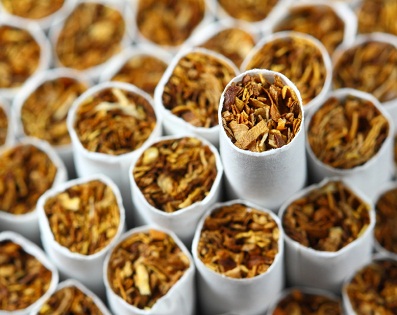
The majority of smokers use cigarettes. A manufactured cigarette is a carefully designed device for delivering nicotine. Cured and processed tobacco is packed and wrapped to create a standardised product. The characteristics of each brand depend on the tobacco type and blend, how it is cured, the additives used and other technical characteristics of the cigarette. These may affect for example the content of different substances in the smoke, burning characteristics nicotine release and the size of smoke particles.
In recent decades, more and more additives have been introduced, and current cigarettes may contain up to 10 per cent additives by weight. Nearly 600 different additives have been documented. They also affect smoke characteristics, such as colour, harshness, odour and flavour.
The main tobacco additives are sugars, which are also present naturally, and moisturising agents. Others include preservatives and numerous flavourings, including cocoa, liquorice, menthol and lactic acid.
Roll-your-own cigarettes, cigars, waterpipes and smokeless tobacco products, which may also contain additives, all account for small portions of the total market.

вторник, 15 января 2013 г.

Korea enjoys tobacco trade surplus


The value of South Korea’s tobacco exports increased by 370 per cent during the past 10 years while imports remained steady, resulting in a tobacco trade surplus since 2004, according to a story in The Korea Times.
Ninety seven per cent of tobacco exports comprise cigarettes.
In 2002, Korea’s tobacco imports amounted to more than double its exports but, by last year, exports had risen to be 1.7 times higher than its imports, data from the Korea Customs Service (KCS) has shown.
“Much of the domestic demand for imported manufactured tobacco appears to have been replaced by demand for Korean-made products as their quality improved,” said a KCS official.
In 2002, more than three quarters of the tobacco imported by Korea was in the form of manufactured products, but this share fell to about 40 per cent last year, with the rest comprising unmanufactured leaf tobacco.
Meanwhile, the Yonhap News Agency said that the value of exports had increased from US$156.29 million to US$572.05 million during the 10 year period, says Tobacco Reporter.

вторник, 4 декабря 2012 г.

New tobacco items pose risks


As cigarette smoking rates have dropped, and more states have adopted public smoking bans, the tobacco industry has created new products to keep users hooked and find new customers, according to Beloit Daily News.

“Other tobacco products,” or OTPs, are harmful and addictive. They are marketed aggressively and priced inexpensively. The new smokeless tobacco products appeal to youth. Adults need to know these products exist, and youth need more help to resist them.

Listed below are some of the most common types of OTP.

• Tobacco sticks resemble toothpicks and will dissolve within 10 minutes when placed in the mouth. One of these sticks contains three times the nicotine as one cigarette.

• Orbs look like small pellets, about the size of a Tic Tac breath mint and last for about 15 minutes. One orb contains 1 milligram of nicotine, which is the equivalent to the nicotine level of one cigarette.

• Strips, similar to a breath mint strip, take 3 minutes to dissolve. They contain slightly less nicotine than one cigarette.

• Snus, tobacco contained in small pouches, is another smokeless tobacco product that is being marketed to smoker to use when they aren’t able to smoke cigarettes.

OTP use is not a safe alternative to cigarette smoking. The consequences of using OTP include cancer, tooth loss, gum disease, and increased risk of heart disease and stroke.

вторник, 7 сентября 2010 г.

General Tobacco Shutting Down

General Tobacco, a maker of low-priced cigarettes that became the sixth-largest U.S. tobacco company during the last decade, plans to shut down after failing to make payments it owed to states under an industry settlement, reported The Wall Street Journal.

General Tobacco news, Mayodan, N.C., stopped producing cigarettes and other tobacco products at its North Carolina plant several months ago and is winding down operations, J. Ronald Denman, executive vice president and general counsel, told the newspaper. He said the closely held company, which is formally called Vibo Corp., recently has been selling off inventory in foreign markets.

The maker of brands such as Bronco, Silver and GT One took market share from larger rivals after it began selling cigarettes in 200, the report said, and it posted annual sales of $335 million by 2004. But its U.S. market share fell to less than 1% from almost 2% in recent years, amid intense competition from other discounters.

Denman said General Tobacco struggled to keep its prices competitive with those of rivals such as Vector Group Ltd.'s Liggett Vector Brands Inc. while meeting the demands of the Master Settlement Agreement (MSA), the landmark pact between 46 state attorneys general and cigarette makers. Under the $206 billion agreement, companies agree to marketing restrictions and make payments to reimburse states for the costs of caring for sick smokers.

General Tobacco joined the accord in 2004, six years after it was signed by major tobacco companies, and agreed to make payments to the states for both ongoing sales and those it recorded prior to joining the agreement.

понедельник, 9 августа 2010 г.

Abandoning tobacco farming for aquaculture

Sam Robi sprinkles feed on a pond and after a while, a school of fish scramble for it. He repeats the same procedure in four out of eight fishponds at his farm in Kuria West District. Besides the fingerlings, there are the bigger fish especially Tilapia, which he sells in the local market.

The cost of a piece of Tilapia in Kehancha market is Sh80. One pond, he said contains 200 tilapia and before December, he is optimistic of earning over Sh100,000 from the sale.
As the leading supplier of fingerlings within the district, he also sells each at Sh5 and in numerous occasions, he has sold up to 3,000 fingerlings. In a single pond, he grows over 1,000 fingerlings.
“This is a constant source of income, which I could not realise from tobacco growing, which I abandoned in 2003 and embraced fish farming,” he said.

Losses from tobacco

This came after he realised that the losses incurred from tobacco growing were a curse rather than a blessing.“The cost of fertiliser, herbicide and the felling of trees to dry tobacco leaves was slowly depleting the trees on my farm,” he said.

Besides this, he had to be on the farm all the time, which often required additional labour— he had to withdraw his children from school to work on the farm.

labour intensive

“Unlike tobacco farming, fish farming is not labour intensive. I need to feed them and maintain the pond,” said Robi.

The fish mature fast and ensure a steady supply to the market. One has to wait for ten months to realise the profits from tobacco.

Tobacco growing areas are also linked to the higher incidences of tobacco related diseases like cancer.

Mr Robi said he started fishfarming with Sh1,500 capital.“I dug a pond and sought the help of a government officer to supply me with the fingerlings. But after waiting for over one year, the fingerlings were yet to arrive at my farm,” he said.

It is then ActionAid, a non-government organisation working to alleviate poverty realised the need to supply him with 600 fingerlings for his three ponds so as to win him over from tobacco growing.
Fish is a key nutrient for the growth and development of children and with his family he is able to net one at any given moment.

During drought he, however, experiences shortage of the commodity as fish survives in water.

Pharmacies shouldn't sell tobacco products

Tobacco use has a devastating effect on public health and well-being. It is our nation's number one cause of preventable death, claiming the lives of more than 440,000 people each year and costing the health care system close to $100 billion annually. In New York state alone, 25,000 adults will die from tobacco-related illness each year. Almost 389,000 kids currently living in New York will ultimately die from tobacco use if the current trend continues.

There is no question that tobacco use is detrimental to one's health. The fact has been common knowledge for years. Why, then, are tobacco products sold in pharmacies? The pharmacy is a place where people get the medications they need to improve their health, yet pharmacies also choose to promote the sale of debilitating tobacco products as well. One can often find nicotine replacement therapies such as nicotine patches, nicotine gum and nicotine lozenges sold alongside the very cigarettes responsible for the grim statistics cited above. Why not offer nicotine replacement therapy along with consultation with a pharmacist, without also promoting the use of tobacco products?

The next time you go to your pharmacy, take a look at the size of the cigarette display. It might surprise you given the presumed purpose of a pharmacy. Take a minute to really think about the contradictory message they are sending to our youth.

Retail locations with pharmacies should make the effort to move beyond these counterproductive retail practices and take tobacco products off their shelves.

вторник, 20 июля 2010 г.

Smoking "Quit Line" offers free nicotine replacement therapy

Donna Smith had sworn to friends if she ever quit smoking, it would be on her death bed. That was before she had grandchildren. "When I found out I had emphysema, that's when I realized it was time to quit," said Smith, 53. "They were a lot more important to me than any cigarette." But as much as she wanted to quit, doing so felt almost impossible. For nearly three years, Smith tried quitting cold turkey or using nicotine patches, but neither method worked.

A new program through the Georgia Quit Line offered the right combination to finally reach success.

Starting last Sunday, the state Tobacco Use Prevention Program relaunched its Nicotine Replacement Therapy program.

The program offers uninsured coastal Georgia residents who call the Quit Line a free, four-week supply of nicotine replacement products in addition to one-one-counseling from a smoking cessation expert.

Smokers who are ready to quit can call the toll-free number where they will be asked several questions about their tobacco use.

"They'll be asked, 'Are you ready to quit within 30 days?'" said Cristina Gibson, director of health promotion and disease prevention at the Coastal Health District. "We know that, really, what it comes down to is whether the person is ready to quit."

If callers say "yes," they can receive in the mail supplies of either SunMark nicotine gum or the Habitrol patch.

But the program doesn't stop there.

Participants also must agree to participate in the Quit Line's "call program." At the convenience of the smoker, a counselor will call them two to five times during the four-week period to check on their progress.

Educational materials about quitting smoking are included with the nicotine replacement product. Participants are encouraged to participate in upcoming smoking cessation workshops offered through area health departments.

Under-used tool

This is the second time that the state's Tobacco Use Prevention Program has offered the nicotine-replacement products through the Quit Line in five of the 18 health districts.

Calls to the Quit Line jumped 600 percent the first time nicotine products were given away in 2008, according to the program's website.

Officials from the state Department of Community Health, which oversees tobacco use prevention efforts, said they could not immediately supply the number of people who participated or how many ultimately quit smoking.

According to the Centers for Disease Control and Prevention's Tobacco Control State Highlights 2010 report, the Georgia Quit Line has been under utilized.

Only about 1.2 percent of the state's smokers have called the toll-free number, placing it 43rd in terms of usage compared to similar services in other states.

The federal agency ranks Georgia 46th in the nation for funding of tobacco control programs.

Currently, 19.5 percent of Georgia residents over the age of 18 are cigarette smokers.

Retail cost for over-the-counter medications such as nicotine gum, inhalers, lozenges or patches can range from $30 to $90 for a two-week supply.

CDC funds currently cover the distribution of 700 doses of nicotine replacement products through the Quit Line.

Still, Gibson said the project should serve as a timely resource for the growing number of local workers whose companies are prohibiting smoking.

In recent months, Gibson has led smoking cessation classes at Georgia Pacific, Georgia Regional Hospital and Arizona Chemical, shortly before each instituted smoking bans.

"Not only are companies concerned about the health of employees and absenteeism, they're also looking at insurance costs, because it's much more expensive to insure a smoker than a nonsmoker," Gibson said.

Multi-faceted approach

Smith turned to the Georgia Quit Line in 2008, after learning about the free nicotine-replacement product offer through her job as a clerk at the Chatham County Health Department.

Smith called the number and received the nicotine patches, in addition to one-on-one counseling over the phone.

Through the combination counseling, patches and the support of her doctor, friends and family, Smith finally put down her last cigarette in August 2009.

"Without all that, I don't think I would have been able to get through it," she said.

понедельник, 14 июня 2010 г.

Zimbabwe: Zim rakes in US$200m from tobacco exports

Harare, Zimbabwe - Tobacco merchants in Zimbabwe said Thursday the country had earned US$199.3 million from exports of the crop so far this year, and earnings were expected to rise further as the marketing season is still in progress.

The Tobacco Industry Marketing Board said a total of 65.3 million kilogrammes of tobacco had so far been exported, mainly to Asia, Middle East and Europe.

It said prices, averaging US$3.09 per kilogramme, were firmer this year than last year because of shortages on the world market after storms destroyed much of Brazil's crop.

The Latin American country is a large tobacco producer, but the storms drastically reduced its crop output this year.

The board said this improved average prices and export earnings.

Zimbabwe expects to export more than 80 million kilogrammes of tobacco this year.